Master Keco Tabs for Expert Collision Repair Training

Updated: Apr 10
In the world of collision repair, mastering the right techniques and tools is crucial for delivering high-quality results. One tool that has gained significant attention in recent years is the Keco tab system. This innovative approach to dent repair not only simplifies the process but also enhances the quality of the final outcome. In this post, we will explore how to effectively use Keco tabs for expert collision repair training, ensuring that you are well-equipped to tackle any dent repair job with confidence.
Understanding Keco Tabs
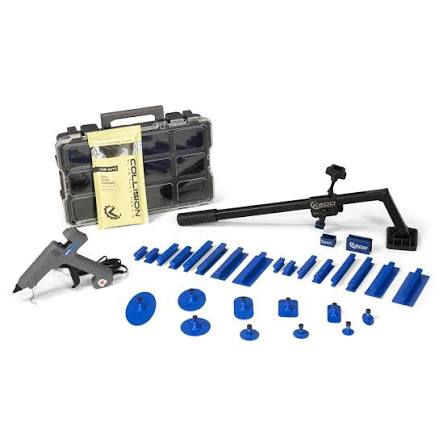
Keco tabs are specialized tools designed for paintless dent repair (PDR). They come in various shapes and sizes, allowing technicians to address different types of dents on a vehicle's surface. The primary function of these tabs is to pull the metal back into its original shape without damaging the paint. This is particularly important in collision repair, where maintaining the vehicle's aesthetic is just as crucial as restoring its structural integrity.
Types of Keco Tabs
Standard Tabs: These are the most commonly used tabs and are effective for a wide range of dents. They come in various sizes, allowing technicians to choose the right tab for the specific dent.
Specialty Tabs: Designed for unique situations, specialty tabs can help with more complex dents that standard tabs may struggle with. Examples include tabs for edge repairs or those designed for use on specific vehicle models.
Keco Glue: The adhesive used with Keco tabs is specially formulated to provide a strong bond while being easy to remove. This is essential for ensuring that the tab can be pulled without damaging the vehicle's surface.
The Benefits of Using Keco Tabs
Using Keco tabs in collision repair offers several advantages:
Efficiency: Keco tabs allow for quicker repairs compared to traditional methods. This means less time spent on each job, leading to increased productivity.
Cost-Effectiveness: By reducing the time and materials needed for repairs, Keco tabs can help lower overall repair costs.
Quality Results: The paintless nature of Keco tabs ensures that the vehicle's finish remains intact, leading to higher customer satisfaction.
Versatility: With various tab shapes and sizes, Keco tabs can be used on a wide range of vehicles and dent types.
Training Techniques for Mastering Keco Tabs
To become proficient in using Keco tabs, proper training is essential. Here are some effective techniques to incorporate into your training program:
Hands-On Practice
The best way to learn how to use Keco tabs is through hands-on practice. Set up a training area where technicians can work on different types of dents using Keco tabs. Encourage them to experiment with various tab sizes and shapes to understand how each one performs.
Video Tutorials
Utilize video tutorials that demonstrate the proper techniques for using Keco tabs. These can serve as valuable resources for technicians to refer back to as they practice. Look for videos that cover:
Proper tab placement
Techniques for pulling the dent
Tips for removing the tab without damaging the paint
Peer Review Sessions
Organize peer review sessions where technicians can showcase their work and receive feedback from their colleagues. This collaborative approach fosters a learning environment and helps technicians refine their skills.
Expert Workshops
Consider bringing in an expert in Keco tab techniques to conduct workshops. These sessions can provide invaluable insights and tips that may not be covered in standard training materials.
Common Mistakes to Avoid
Even experienced technicians can make mistakes when using Keco tabs. Here are some common pitfalls to watch out for:
Using the Wrong Tab Size: Selecting a tab that is too large or too small for the dent can lead to ineffective repairs. Always assess the dent carefully before choosing a tab.
Insufficient Adhesive: Not applying enough glue can result in the tab pulling off prematurely. Ensure that the adhesive is applied evenly and generously.
Pulling Too Hard: It can be tempting to pull hard to remove a dent quickly, but this can cause further damage. Use steady, controlled pressure to avoid stretching the metal.
Real-World Applications
To illustrate the effectiveness of Keco tabs, consider the following real-world scenarios:
Scenario 1: Hail Damage Repair
A vehicle with multiple small dents from hail can be a challenging repair job. Using Keco tabs, technicians can efficiently pull out the dents without the need for repainting. This not only saves time but also preserves the vehicle's value.
Scenario 2: Minor Collision Repair
In the case of a minor collision that results in a dented fender, Keco tabs can be used to restore the fender's shape without the need for extensive bodywork. This approach minimizes the repair time and cost, making it a win-win for both the technician and the customer.
Conclusion
Mastering Keco tabs is essential for any collision repair technician looking to improve their skills and efficiency. By understanding the different types of tabs, practicing hands-on techniques, and avoiding common mistakes, technicians can deliver high-quality repairs that satisfy customers. As the industry continues to evolve, staying updated on the latest tools and techniques will ensure that you remain competitive in the field.
Take the next step in your collision repair training by incorporating Keco tabs into your skill set. With dedication and practice, you can become an expert in this innovative repair method, providing exceptional service to your clients.


Comments